Category: SEO

  • A Practitioner’s Guide to SEO for Lawyers in 2026 

    A Practitioner’s Guide to SEO for Lawyers in 2026 

    Search Engine Optimization is not just about rankings. It is also about connecting your legal business with people actively seeking legal representation. That is why enriching your search results is crucial: it involves identifying relevant keywords, building a regional presence, and creating material that actually resonates with users. The following is a lawyer SEO guide to help you improve your search engine rankings.

    To keep your practice popular and busy, you must use a lawyer SEO strategy. Where do you think people go to find the right lawyer for themselves? The Search Engine, of course!

    Whether they are looking for an individual lawyer or a law firm, everyone runs to the search engine for answers. That is why it is imperative to optimize your website so seekers can find your business first.

    What is SEO for lawyers?

    SEO for lawyers is the practice of optimizing your law firm’s website to appear in organic search results. It focuses on keyword research, content, local listings setup, and more.

    The Importance of SEO for Lawyers.

    There are several reasons why you must adopt lawyer SEO strategies.

    1. Online visibility – A crucial element of the entire SEO exercise, you can improve your visibility by optimizing your site for queries like “lawyers near me” or “best lawyer in Los Angeles.” It is imperative for lawyers to build an online presence so users can find them when they need them.
    2. Qualified traffic – Investing in SEO will attract qualified traffic to your website. With a well-optimized SEO strategy, you can focus on the right keywords and take the right digital steps that will put you in front of the most relevant audience.
    3. Increase in customer numbers – SEO marketing for lawyers will help you grow your practice if you are looking beyond mere visibility. With SEO, you can build a strategy that uses targeted keywords and SEO-driven content to turn site visitors into actual customers.

    Executing Lawyer SEO

    Get started with lawyer SEO strategies for your practice that use the following:

    Keywords: Don’t leave any stone unturned in looking for the right keywords. Use a variety of paid and free tools online to discover searches relevant to your practice. Discover the most relevant search queries for your target market and practice. Using advanced tools, you can evaluate key metrics such as average CPC, competitiveness, and monthly search volume. Use keywords with low competitiveness and high search volume. Target a more developed search intent when you use long-tail keywords. Short-tail keywords are difficult to rank and extremely broad, making them less relevant.

    Unique SEO content: When content is unique and helpful, search engines like Google value it. Display your skills and knowledge to prospective customers and establish topical authority in the industry. When you build this trust, it makes your potential patrons more confident, and they invariably choose your practice for their legal needs. Focus on topics that your audience is actually seeking. Talk about family law, divorce proceedings, or criminal implications, all of which have a big impact on your clients.

    Google Business Profile Listing: Claiming your Google Business Profile will put you on the map and enable in-person visits. This strategy can improve localized search results and provide critical information like your address, phone number, and hours of operation. People can also visualize reviews, photos, services, FAQs, and more. When you own your Google Business Profile, you are in control of how people can contact you, where they can find you and how you can help.

    Backlinks: Another crucial aspect of SEO is linking one site to another. Your lawyer SEO strategy can drive acquisition opportunities by offering helpful content and user-focused articles that explain a new process or share original research. Compile new and relevant ideas for your legal practice.

    User-friendliness: A web page includes elements such as usability, accessibility and readability. To achieve the best page experience, you must hire a web developer and a designer. Alternatively, if you choose to use an online website builder, you can browse several pre-optimized templates to build a user-friendly web page. For seamless execution, consider partnering with an agency that has a background in SEO and web design. Leverage their expertise to redesign your site with critical lawyer SEO best practices.

    SEO LINK BUILDING

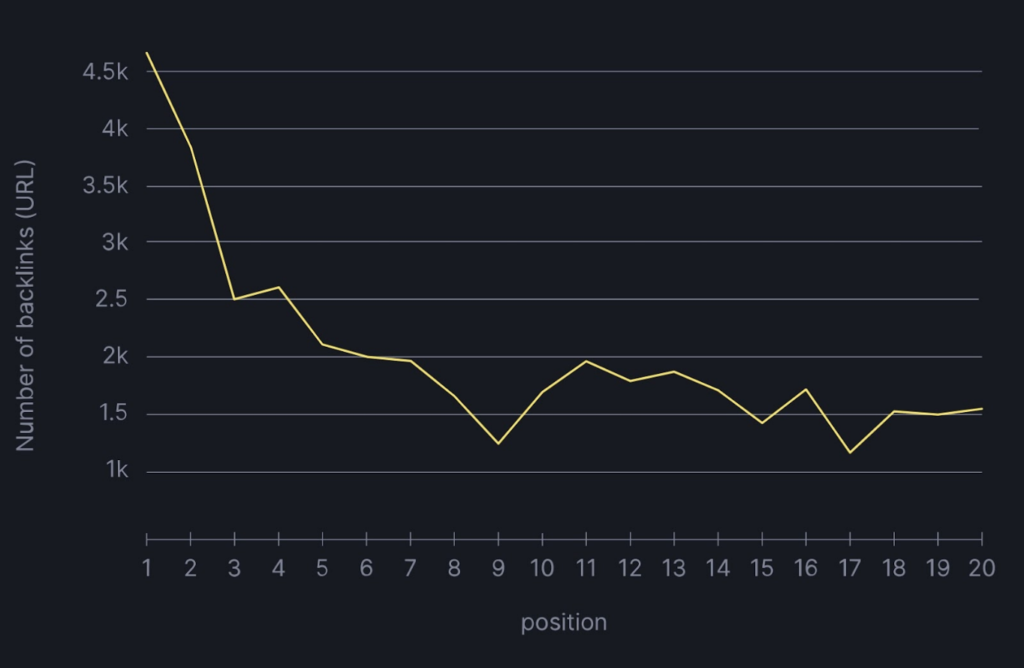
    Links from other websites to your law firm’s site act like backlinks, and search engines like Google determine the relevance and trustworthiness of your brand online. When reliable and prominent websites link to your law firm’s content, it is considered a sign that your website is trustworthy and can rank higher on the SERPs. That is why backlinking is considered an effective SEO strategy, especially when the links come from high-quality sources, as they pass authority to your site.

    number of backlinks, line graph, yellow graph, seo for lawyers

    The process of backlinking

    When you publish a high-quality blog or web copy, it will not gain authority instantly. That is why you need a strategy that links your content to trustworthy sources to help it rank higher in search results. This is because search engines see your content as credible, high-quality, and relevant. However, you must note that your law firm’s website will not rank if your backlinks come from irrelevant sites. In fact, they would be considered spam. Having too many low-quality links can harm you. That is why high-quality link building can be effective in driving organic traffic both in the short term and the long term.

    Different types of backlinks

    As part of your backlinking strategy, you should know that there are different ways to link to other websites. 

    Follow Links

    Use follow links to a website that a search engine would actually crawl. Especially if the link is from a trusted source, the authority is passed on to your page. Additionally, your page gets more context as search engines find it relevant. 

    <a href="https://example.com/">Visit LAWAGENZ’s homepage</a>

    User Generated 

    These come from different sources such as blog comments, infographics, and profile pages. These are non-sponsored content and usually include the rel=’ugc’ attribute. 

    <a href="https://example.com/" rel="ugc">Visit website</a>

    No Follow Links

    These are used when you link to a page on another site that you don’t want search engines to crawl. Use the rel=’nofollow’ attribute for this. 

    <a href="https://example.com/" rel="nofollow">Visit XYZ’s homepage</a>

    Sponsored Links

    Also called paid links, they are used when the person inserting the link is getting paid. This contains the rel=’sponsored’ attribute. 

    <a href=”https://example.com/” rel=”sponsored”>Grab these latest prices (affiliate link)</a>

    Primarily, user-generated links are an organic strategy because most of them do not pass authority, as they originate from less reliable sources. However, you must be careful when using unnatural UGC links because these are typically low-quality and can result in low page ranks, too. Allow user-generated links to grow organically with website visitors and readers to help boost your SEO. There is also a more efficient and natural backlinking strategy. This is when someone reads your content, leaves a comment, and includes a link to their site. This way, it also provides value to other readers. These links should contain no ads or paid content.

    Link building strategies for your law firm SEO

    You can request backlinks from high-authority sources and websites from your niche that have a high page rank. Make a list of these credible sites and contact the owners directly to request a link. This is known as manual outreach. It could take some time, but it is also the best and most effective way to build a strong backlink profile. The sites that you reach out to must be within your niche. The process requires some research, since you must review the page rank and the credibility of these websites. Thereafter, draft an email to send to site owners. Monitor the open rates of each email and revise drafts as needed. Follow up with the site owners for a legitimate response.

    WEB DESIGN FOR LAW FIRMS

    Responsive web design for your law firm

    Focus on providing users the optimal mobile experience by making your website responsive. Ensure your design is responsive across all screen sizes and devices. Desktop screens are large, while smartphones are small, and tablets are slightly bigger. Design decisions should be made for screens and not devices. 

    Always ensure your content is never hidden, whatever the device. Give users full access to view the content on any device or screen. 

    Don’t assume that a single or particular screen size is more prevalent and design your website accordingly. Take every screen size and user into consideration and orient your website and its information for them. Thereafter, test with actual users as often as possible.

    Website structure

    Content is one of the most crucial aspects of a website. While this might be true, the way it is presented is equally important. This is primarily because search engines must be able to understand your site. However, site structure is often overlooked. Your law firm website structure doesn’t improve with aesthetics alone; it also helps simplify some of the main functions of search engines.

    Ranking

    Search engines decide which results to display first to the users. The main idea is to provide seekers with the best possible answer to their query. Typically, the engine uses several ranking factors to determine the results. The complexity of search engines means that users can get different outputs each time they search for the same thing. 

    Crawling: During the process of crawling, when there’s a new page, the search engine tries to discover its context and what it is all about. The most common way a website is crawled is by reaching out to either a new page or a sitemap and finding a link. The search engine first reads the page content before determining its place on the SERPs. 

    Indexing: After crawling comes indexing, where the page is sorted and then stored in an appropriate place in the search engine’s database. 

    Search engines are always looking for well-structured content to make crawling and indexing easier. Site structure can be optimized to achieve higher rankings by simplifying crawling and indexing.

    Improving site navigation for your law firm SEO

    The overall structure of a site impacts its navigation. The main navigation bar, for instance, and drop-down menus are used to access different pages. Even if you are a law firm that practices only in a single area, you can still improve your navigation. With good navigation, your website is easy for web visitors to find, and they can find the information they require. Strategy to apply:

    • Include common FAQs on the dropdown menu so that visitors can find them.
    • Break down legal services into subcategories and create direct links to them. For instance, break down family law services into divorce, separation agreements, child custody, etc., allowing visitors to choose and go to their preferred page without having to scroll past irrelevant information. 

    Remove dead ends

    Another way to improve your site structure would be to remove any dead links on your law firm website. However, it is important to identify broken links first and then remove them. There are several ways to identify a broken link on your website. You can use Google Webmaster Tools to find them all on the website or use Google Analytics to track how many hits the 404 error page gets. You can also use a customized tool to identify dead ends and automatically send broken links to your inbox. This way, you can get rid of them before they hurt your site rankings.

    Common tools to identify broken links on your law firm information

    Use WordPress’s Broken Link Checker to find dead ends and conduct a deep analysis of your site’s structure. The tool is simple to use: just enter your law firm’s website URL to automatically find dead ends. Broken links can harm your search rankings and destabilize user experience, resulting in high bounce rates. That is why too many dead ends can be harmful for your website’s credibility. It shows that your website is not being updated frequently. 

    KEYWORDS

    Using the right keywords

    Keyword optimization should be done for search engines and users. Additionally, keywords must be used in the copy in a way that is relevant to your practice area. For instance, if your law firm focuses on family law, your keywords should focus on this area as well. Here are some ways you can effectively optimize keywords for your law firm:

    • Make your keywords location-specific. Identify long-tail keywords with a location to make them more impactful. 
    • Use broad legal terms. If your firm practices bankruptcy law, use effective keywords focused just on that. 
    • Just before you begin writing optimized content, create a site architecture. This will help you identify where your keywords belong. 
    • Optimize one page for your main keywords. Rankings could be affected if your main keywords appear on multiple pages. 

    Finding keywords that actually make a difference

    Take some time to identify the right keywords before you start optimizing content. This is an integral part of SEO for lawyers. Here are some steps to help you choose the right keywords and phrases for your law firm website. 

    • Identify your goals
      Decide how you would like your law firm to come across to your audience. Besides, you should have a clear idea of who your ideal client is. These aspects are good starting points for your keyword optimization strategy to meet your marketing goals. Focus on niche keywords in your practice area rather than general legal keywords. You should also know where you want to position yourself geographically, as this will determine your local SEO key phrases. 
    • Blog topics most relevant to you
      Clearly identify your practice areas and your offerings for the keywords. Thereafter, ideate around 10 blog topics based on them. If you already have an active blog page, check which of these are frequently read so you can revolve your subject ideas around them. 
    • Expand the topics with additional keywords
      Depending on your customer type and the kind of information and services they need within the categories you just narrowed down. Use a keyword research tool as it already captures the phrases web visitors use. Look at organic search traffic with Google Analytics and observe the search terms already used. 
    • Analyze keyword strength 
      The most obvious keyword to optimize your law firm website would be ‘lawyer’. However, this could be futile since this is one of the top 25 competitive keywords on Google Adwords. Besides, it could be very expensive to bid for it. Bid for terms and phrases with a realistic approach. If you are a small legal practice, choose less competitive keywords. Use research tools like SEM Rush to identify keywords that your competitor is already ranking for. You just have to enter their domain name to place your focus. 
    • Search intent 
      Understand your client’s intent before you begin optimizing your content for certain keywords. Type some of the phrases on Google and see the pages that appear in terms of ranking. Make sure your content delivers what your client is seeking; otherwise, it could hurt your rankings.

    CONTENT

    Content quality is more important than word count

    The length of a website’s content is not a factor for ranking. It is the quality of the content that makes a bigger difference for search engines. Creating long-form content, however, has its own benefits. You can dive deeper into a particular subject with longer content, providing users with more extensive insight into the topic. In-depth content attracts more social shares, and visitors tend to spend much more time on the page. Yet content has to capture users’ interest to keep them on the page longer. But it is not necessary for all your content to be 2,000 words or more. While content length has its benefits, content quality is more effective for overall rankings because it attracts readers.

    Power pages for your law firm website

    Your website must include power pages with carefully curated content designed to rank highly in search engines. The concept of power pages is designed to boost your website’s rankings to the top of the SERPs. This is one of the most effective ways to ensure you produce content better than anyone else online. Some characteristics of power pages are:

    • Better user experience regardless of the device
    • Data is from trusted sources
    • Content is engaging, useful, and sparks emotional interest
    • Covers a unique scope different from what is already present
    • Information provides answers to questions in a way that’s different from what’s already out there

    A power page, thus, is a powerful tool that provides visitors with answers to their search query in such depth that they don’t have to look elsewhere for information. 

    LOCAL SEO FOR LAW FIRMS

    Depending on the following factors, your law firm website can rank on search engines:

    Relevance: Your local business profile must suit the seeker’s query. Your business information, such as your address, availability, and practice areas, is reviewed by Google and matched with local search results. The web page will be displayed at the top of the SERPs if it is relevant. 

    Reputation: Businesses with a strong reputation in the local area are given greater prominence in local search. However, this depends on directory listings, high-quality backlinks, and shared articles. Google evaluates this information to give a business prominence in local search results.

    Distance: The search engine also considers the distance between the searcher and the law firm. Google collects all available information about the searcher’s current location to assess distance and match it to the law practice.

    Citations for local SEO

    Citations need not consist of a link to the website. This is one of the biggest misconceptions about local SEO. When your law firm’s information, such as the name, address, and telephone number, is included, building citations is easy. Additionally, the mentions on your law firm website must come from trusted sources for developing citations. 

    Getting started with relevant citations for your law firm:

    • Find relevant legal marketing directories. Some of the most common ones are HG.org. Avvo etc.
    • Display your law firm’s information across public online sources and ensure they all sync. 
    • Go to platforms like Yelp and BBB to review and verify your law firm’s information. These platforms provide high-quality citations for your law firm. 
    • Check for other sources of citations, such as digital newspapers and magazines focused on the legal industry.

    Location pages

    When you enter a search query on Google, you will see that it mostly shows you results that are closest to you. This is because search engines are providing answers most relevant to the seeker’s region. That is why it is important to optimize your law firm for integral regions and cities. Google uses several signals to determine whether a page is a good match for a specific local search. As part of your lawyer SEO strategy, it is highly recommended to create a local landing page. 

    Google My Business Listing

    There are several reasons why your law firm needs a Google My Business Listing.

    • Your website gets more prominence and ranks higher for relevant searches because a GMB listing appears right on top of organic search results. 
    • You can add photos, social links, customer reviews, and any other additional details in your GMB listing to increase your page’s CTR on the SERPs. It generates more traffic to your website and social media because it appears in a visible location. 
    • Law firms can showcase their customer reviews on SERPs with GMB listings. Prospective clients contact you even before they visit your website to learn more. 
    • GMB listings offer crucial insights that let you make valuable decisions for your law firm. Go to the analytics section of the platform to check for client requests. You can review insights here, make long-term decisions, and expand your business accordingly. 

    EVALUATE KEY PERFORMANCE INDICATORS

    Check these KPIs frequently to ensure consistent performance: 

    • Rankings: Check if your website is still ranking for relevant keywords. If not, it is time to improve your SEO strategy. It could happen that the keywords you were initially ranking for have now become competitive. At this time, you can also shift your strategy to PPC and review your site’s technical SEO. 
    • Spam Score: Use the Moz Spam Score tool to check if any of the backlinks are marked as spam on your law firm website. Before they negatively impact your domain authority, identify and remove them. 
    • Conversion rates: Check whether any of your law firm website pages previously had high conversion rates and whether the number of leads has now declined. Contact form completions and consultation requests can be visualized on Google Analytics. You must test CTAs continuously till you know what works best for you. 
    • Bounce rates: If your law firm website is attracting poor-quality traffic on landing pages, chances are you have a high bounce rate. Insights on the source of such traffic are available on Google Analytics. When the number of pages visited per session is low, it also indicates poor-quality traffic. 
    • Backlink Quality: Use a tool like Ahrefs to check the number of backlinks on your website. If these links are from low-quality sources and are not relevant to the legal profession, they could be an impediment to your SEO efforts. Remove them to improve traffic and rankings. 

    Always be ready to adjust your SEO strategies as needed while you regularly evaluate your KPIs. Monitor the indicators consistently to make periodic adjustments and to stay ahead of the game.

    HIRE AN SEO AGENCY

    Getting leads online is one of the most integral parts of internet visibility for law firms. Even when you have a talented team of lawyers who have a great representation history, you must grow your client base in order to stay afloat. That is why a highly engaging law firm website is imperative, so you do not miss out on the hundreds of potential customers who can be converted through a robust SEO campaign. 

    You cannot perform all the backend tweaks on your own. It requires a particular level of technical skill and expertise that is not found instantly on the rye. You need to hire a law firm SEO agency that helps you rank on top of the SERPs and helps you garner conversion-optimized leads. 

    Here’s what an experienced law firm SEO agency can do for you: 

    • Improves traffic and poor rankings
    • Applies the best practices to build a great link profile
    • Goes beyond mere word of mouth to grow your client base
    • With faith in your legal services, they add value to potential clients online
    • They remove any penalty imposed by Google that affects your traffic and SERPs
    • Your backlink profile is thoroughly cleaned up to indicate legitimate sources of information
    • Ensures you stop overspending your PPC budgets and duly generate traffic
    • An expert law firm SEO agency helps your content reach the right audience at the right time

    LawAgenz is best for your law firm SEO

    We believe in taking quantum leaps that help improve our client’s website traffic and conversions. As an innovative marketing agency dedicated to serving legal clients, we take challenges head-on and execute winning strategies that push our clients to #1 on the SERPs for legal phrases. The SEO landscape is vast and constantly changing in response to algorithmic shifts. But our knowledgeable team always stays updated with trends and uses the latest strategies to help law firms stay ranked high. Additionally, we ensure you have a sustainable stream of leads that keeps you happy and busy in your domain. Our results are unmatched, and the outcomes are highly visible and actionable.

  • How to Optimize Content for Google AI Overviews for Law Firms

    How to Optimize Content for Google AI Overviews for Law Firms

    The Canadian law firm landscape is being taken over fast by Google’s AI. AI is now capturing your firm’s visibility. Which means it’s time to learn how to adapt.

    Generated from the indexed web, Google AI Overviews for Law Firms understands you as an entity, not ranking signals. If your text is descriptive and your presence is consistent across the web, then you will certainly be summarized accurately by AI. Today, as search is being transformed, search engines are also upgrading themselves with deeper AI integration. So much so that AI is now embedded in the way people research and make decisions. Generative systems are impacting every Canadian law firm’s online visibility. Whether you are an individual practitioner or a large firm, you must stay AI-ready in 2026.

    Into AI Transition

    With features like AI Overviews, Google’s AI search updates are taking precedence and rapidly expanding into AI mode. Law firm websites have always ranked based on SEO efforts. Now, with information searches being summarized by AI, legal queries are also appearing in AI-generated overviews. AI summarizes indexed pages and does not depend on a single ranked result. Google AI Overview for law firms combines results from already indexed pages with a broader understanding. When a firm has a dedicated page answering specific questions about a practice area, there is a lot more indexed text to draw from than a firm that has only mentioned the area in passing.

    Local Pack and AI Overview treat a law firm differently.

    This is primarily because AI Overview relies on written content, whereas the local pack relies on profile data. Google’s local pack relies on Google Business Profile updates, which include Google Reviews, the address, the telephone number, and images of the law firm. In contrast, Google AI Overview looks for a firm’s website and other indexed sources. That is why even if a firm ranks well locally but has thin content and descriptions, it is not seen in the AI Overview.

    AI SEO FOR LAWYERS

    Categorized across several principles, such as content optimization, technical optimization, local business citation optimization, and other considerations, AI Overview works with certain fundamentals.

    Optimizing Content

    The goal of content optimization is to help AI rank better by creating legal texts that are recognized as credible. Google’s AI Overview aims to ensure that legal service information is provided effectively. This helps to build trust among users. Here are some tips on how to adjust their content strategy to appear in AI Overviews for lawyers and law firms.

    Establish Entity Authority

    The About page should be the primary source of truth and include the legal structure, office location, official company name, leadership details, coverage, a statement of the firm’s mission and vision, core practice areas, and client focus. Lawyers must create detailed profile pages that include their education, practice areas, case experience, memberships, publications, media appearances, and other social media information, particularly on LinkedIn, to foster EEAT and legal YMYL signals.

    Content Precision and Detail

    Ensure that the content is clear, accessible, and precise. Legal processes can be complex, and law firms must present information in an extremely easy-to-follow format. Besides being comprehensive and factually accurate, content should be current and provide the latest in legal developments.

    Timely Updates

    With the legal landscape changing constantly, maintaining the reliability and usefulness of the content is important. Reflect the latest laws, rules, regulations, court decisions, etc.

    Structuring Content – Schema Markup For Law Firms

    Structure and section the content so that both human readability and AI retrieval are possible. Section the content into smaller segments so Google’s AI Overview and AI mode can pull information from those sections rather than the entire page. Each of these sections must focus on a single question or idea with a supporting page title.

    Moving beyond traditional keywords

    Produce in-depth, relevant content that addresses legal issues within your practice area. The value of keyword research has diminished with the rise of zero-click updates. Leverage Google’s “People Also Ask” feature to offer accurate and the latest insight. Use audience research and conversations from actual customers to develop site content.

    Source: Internal

    Long-tail queries drive AI Search Visibility

    Long conversational phrases are typically used by people seeking legal information. AI engines can answer head term searches and top-of-funnel queries. That is why it is wise to create legal content for those most likely to view it.

    Thematic Search Optimization

    To make the most of the AI Overviews feature, consider using the thematic search or query fan-out capabilities in AI mode. With this, it helps to break down complex queries from users into smaller categories that can be researched so that various relevant material can be generated efficiently.

    Technical SEO

    AI Overview prioritizes content that is structured and easily crawlable. Ensure your website is eligible for inclusion in AI-generated summaries, snippets, and enhanced search results with a well-optimized technical foundation. With detailed schema markup, you can provide explicit information about your firm and its authority. Besides, your website should be responsive, prioritize performance metrics such as page speed and Core Web Vitals, and use descriptive URL structures and accessible menus.  

    Optimizing Local Business citation

    Local citations are considered a very fundamental aspect of local SEO because they influence your business’s performance in AI Overview. Citations are useful for search engines, as they help confirm your company’s authenticity and location and build credibility with potential consumers. Therefore, it’s important to significantly improve the quantity and quality of your local business citations:

    • Google Business Profile and Map listings
    • Develop location-specific content
    • Maintain NAP consistency
    • Build a highly scalable review strategy.

    Broadening your content spectrum

    Maximize SME output with multi-channel strategies that leverage multiple content formats. Scale your SME content without overextending your legal team. Develop video content, engage on high-signal platforms and expand guest content.

    GEO – Using predictive generative engine optimization

    Harnessing the power of GEO is a forward-facing approach that blends historical data and AI-driven search dynamics to identify user intent and optimize content before positioning queries arise. To maximize reach and relevance, use trend forecasting, conversational intent mapping, dynamic content scheduling and an AI-friendly schema markup. Predictive GEO gives your law firm AI SEO the first-mover advantage in AI search as it enables you to publish just before emerging issues gain traction.

    Optimize Voice Search

    Voice-enabled searches are in demand with the rise of devices like Siri and Google Assistant, which have fundamentally changed the way people seek legal services. Voice searches are conversational and driven by intent, particularly for urgent legal needs. Target conversational phrases and questions, prioritize mobile-friendly queries, leverage natural language keywords and use answer-oriented content for voice search optimization.

    Brand Identity

    Search results for your law firm may include links to third-party websites. After all, it is the age of generative AI. These third-party website links contain outdated and misleading content. This means generative AI engines pull data not just from your website but an array of other sources, as well. Protect your brand identity and reputation and take proactive measures to strengthen your brand signals.

    Final Thoughts

    Google AI Overviews for law firms enhance your website’s visibility through strategic content marketing. Traditional search volumes are declining as generative AI engines evolve and grow. Law firms have always focused on rankings and clicks. But now SEO for AI search should no longer be ignored. For more information, reach out to our consultants.